Storm Damage
Florida Storms Don't Wait. Neither Do We.
Fast inspections, thorough documentation, and complete repairs — plus hands-on support through every step of the insurance process.
Proudly Serving Central Florida
Detect Storm Damage Instantly — Even What You Can’t See from the Ground
Our Satellite Technology Identifies Damage Before You File a Claim
After a storm, you need to know if you have damage — and you need to know fast. Our advanced satellite imaging technology can scan your roof and detect storm damage from above, often identifying issues that aren’t visible from the ground.
What Our Satellite Scan Detects: - Missing or displaced shingles - Hail impact patterns and damage - Wind-lifted sections - Debris impact areas - Structural irregularities - Damage progression since last storm
How It Works: 1. Enter your address — We locate your property instantly 2. AI scans your roof — Compares pre-storm and post-storm imagery 3. Get damage report — Detailed assessment with photo evidence 4. Know before you file — Make informed insurance claim decisions
Why This Matters: - Identify damage you can’t see from the ground - Document damage immediately after storm (critical for insurance) - Avoid filing unnecessary claims (or missing valid ones) - Get professional assessment before contacting insurance - Free, no obligation, takes 2 minutes
Do You Have Storm Damage? Look for These Signs
-
Exterior Signs (Visible from Ground)
□ Missing shingles or tiles — Gaps in roof covering
□ Shingles in yard or gutters — Blown-off material
□ Dented or damaged gutters — From hail or flying debris
□ Damaged or missing roof vents — Torn or displaced
□ Granules in gutters or downspouts — Excessive loss from hail
□ Damaged fascia or soffits — Impact marks or holes
□ Debris on roof — Branches, leaves, or foreign objects
□ Visible dents on metal — Flashing, vents, or metal roofing -
Interior Signs
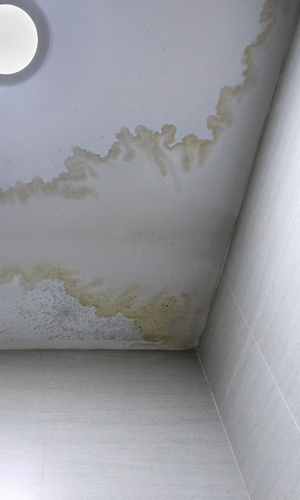
□ New water stains on ceilings — Especially after recent rain
□ Water stains on walls near roofline — In attic or living spaces
□ Ceiling sagging or bulging — Water weight accumulation
□ Daylight visible through roof boards — In attic
□ Dripping or active leaks — During or after storms
□ Musty smell in attic — Indicates hidden moisture
□ Wet insulation — Check attic after heavy rain -
What Neighbors are Experiencing
□ Neighbors filing claims — If multiple nearby homes damaged, likely you are too
□ Roofers canvassing your neighborhood — Sign of widespread damage
□ Multiple insurance adjusters in area — Indicates claim activity
If you checked 2 or more boxes, schedule a free inspection. Many homeowners don’t realize they have claim-worthy damage until it’s professionally assessed.
Common Types of Storm Damage in Central Florida
What to Look For After High Winds, Hail, or Heavy Rain
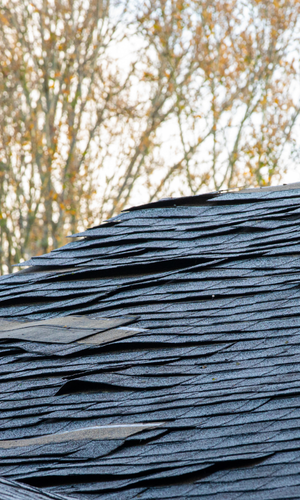
Wind Damage: - Missing shingles or tiles blown completely off roof - Lifted shingle edges (broken seal strips, creating vulnerable entry points) - Displaced or torn flashing at valleys, walls, chimneys - Damaged or missing ridge caps along roof peaks - Torn or damaged underlayment (visible in areas with missing shingles) - Debris impact from flying objects (tree branches, lawn furniture, etc.)
Hail Damage: - Dents or bruising on shingles (appears as dark spots or circular marks) - Cracked or split shingles from direct impact - Granule loss in concentrated patterns (not just general aging) - Dented metal flashing, vents, gutters, or roof accessories - Damaged roof penetrations (vents, pipes, skylights showing impact) - Fractured fiberglass mat (visible under shingle surface when damaged)
Water Intrusion Damage: - Active leaks during or immediately after rain events - Water stains on interior ceilings or walls - Sagging or bulging ceiling areas from accumulated water - Mold or mildew growth in attic spaces - Wet or compressed insulation - Damaged or water-stained wood decking (visible from attic)
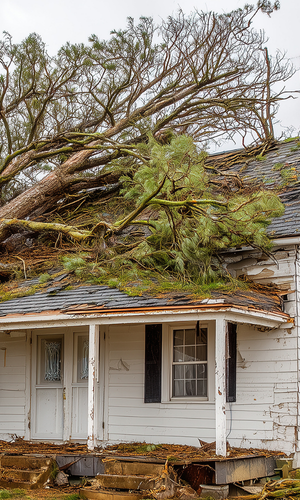
Fallen Debris Damage: - Tree branches, limbs, or entire trees on roof surface - Punctures or penetrations through roofing material to deck - Crushed or compressed roof sections from heavy debris - Broken trusses or rafters (structural damage requiring immediate attention) - Damaged gutters, fascia, or soffits from impact
Not all damage is obvious from the ground. Our thorough inspection identifies everything — visible and hidden.
What You Can’t See Is Often What Matters Most.
After a major storm, most homeowners look for the obvious — missing shingles, visible holes, water stains on the ceiling. And while those are real problems, they’re not the whole picture.
Storm damage often shows up in places that require a trained eye and a thorough inspection to find:
- Lifted shingle edges that look intact but have broken the seal
- Flashing that’s shifted just enough to let water in over time
- Granule loss that accelerates aging and shortens your roof’s remaining lifespan
- Decking stress that won’t manifest inside your home until the next storm
- Hail bruising that doesn’t show as cracks but compromises shingle integrity
- Wind damage patterns indicating widespread seal failure
We look for all of it. That’s what a thorough assessment actually means.
What to Do Right Now If You Have Roof Damage
Immediate Steps to Minimize Damage While You Wait for Help
Step 1:
Free Storm Damage Inspection
What We Do: - Comprehensive roof inspection (all planes, valleys, penetrations, flashing) - Attic inspection for interior damage and leaks - Satellite damage scan and comparison - Complete photo documentation from multiple angles - Detailed written report of all findings - Assessment of claim-worthiness
Timeline: Within 1-2 days of your call (often same-day after major storms)
Cost: $0 — Completely free, no obligation
Step 2:
Damage Documentation for Insurance
What You Get: - Professional photo documentation of all damage - Detailed written assessment with damage locations - Itemized scope of necessary repairs - Estimated repair/replacement costs - Storm date correlation (when damage likely occurred) - Comparison to pre-storm condition (when available) - Satellite imagery showing before/after
This documentation is formatted specifically for insurance submission — exactly what adjusters need to see.
Step 3:
Insurance Claim Guidance
We Help You: - Understand what’s covered vs. not covered under your policy - Decide whether filing a claim makes financial sense (deductible vs. damage cost) - File your claim with proper documentation - Communicate directly with your insurance company (if you want us to) - Navigate Florida’s specific insurance requirements - Avoid common claim mistakes that lead to denials
Florida Law Disclosure: You must contact your insurance company to verify coverage before signing any roofing contract. We help you navigate this process correctly and legally.
Step 4:
Adjuster Meeting & Negotiation
We Attend With You (At Your Request): - Present all damage documentation to adjuster - Point out damage that might be missed during walk-through - Explain proper repair scope and methods - Challenge lowball estimates when warranted - Ensure nothing is overlooked or minimized - Document adjuster’s findings for your records
Our Experience Matters: We’ve worked with hundreds of insurance adjusters and know what they look for, what they miss, and how to ensure your claim is accurately assessed.
Step 5:
Claim Approval & Funding
What Happens: - Insurance reviews documentation and adjuster report - Claim approved (or denied — see FAQ for what to do) - Payment issued (typically to homeowner minus deductible) - We provide final detailed quote matching approved scope - Contract signed for work to proceed - Deposit collected (often from insurance proceeds)
If Claim is Denied or Underpaid: - We help you understand the specific reasons why - Provide supplemental documentation addressing concerns - Guide you through the appeals process - Recommend public adjuster if situation warrants (complex disputes)
Step 6:
Professional Repair or Replacement
Our Work: - Complete all repairs per insurance-approved scope - Install to manufacturer specification (maintains warranty) - Use insurance proceeds efficiently (we don’t inflate, we don’t cut corners) - Handle all building permits and inspections - Provide progress updates throughout project - Final documentation for insurance company - Lifetime Workmanship Warranty on all work completed
Timeline: Scheduled at your convenience after claim approval (typically 2-4 weeks from approval to completion)
6-Step Process Summary
1. Free Inspection → 2. Documentation → 3. Claim Guidance → 4. Adjuster Meeting → 5. Claim Approval → 6. Professional Repair
We’re with you every step of the way — from first inspection to final nail. You’re never navigating the insurance process alone
You Shouldn’t Have to Fight Your Insurance Company Alone.
The insurance claims process after storm damage is designed to be thorough — which means it can also be time-consuming, confusing, and frustrating when you’re already dealing with a damaged home. Adjusters are busy, documentation requirements are specific, and it’s easy to leave money on the table if you don’t know what to ask for.
Strux takes that off your plate.
We’ve been through this process hundreds of times and know: - What adjusters look for during inspections - What documentation makes claims move smoothly - What to do when claims get denied or underpaid - How to identify damage that adjusters might miss - When to push back on lowball estimates - How to navigate Florida’s specific insurance requirements
We stay involved from first inspection to final approval — and we don’t disappear after the check clears.
We don’t work for your insurance company. We work for you.
Why Choose STRUX for Storm Damage Claims?
Experience That Protects Your Investment
We’ve Navigated Hundreds of Storm Claims:
We know what insurance adjusters look for and expect - We understand Florida-specific storm damage patterns (wind vs. hail vs. water) - We speak the language of insurance documentation - We’ve successfully appealed denied claims and secured proper settlements.
We Don’t Work for Your Insurance Company
We advocate for you, not the insurance carrier - We fight for full and fair claim settlement - We won’t accept lowball estimates that don’t cover proper repairs - We ensure nothing is missed or minimized during assessment.
We Handle the Entire Process
Free inspection and comprehensive documentation - Insurance claim guidance and filing support - Adjuster meeting attendance (we’re there with you) - Supplemental documentation if claim is challenged - Professional repair or replacement to exact specifications - Final insurance documentation and warranty activation.
We’re Local and Accountable:
Florida Licensed & Insured #CCC1331761 - Serving Central Florida for the long term (not storm chasers) - Lifetime Workmanship Warranty on all repairs - We’ll be here years from now if any issues arise - Local reputation matters to us — we do this right.
We’re Honest About Claims
We don’t encourage unnecessary claims (they can raise your rates) - We tell you if damage doesn’t warrant a claim (below deductible, minor wear) - We only support claims when damage is legitimate and financially justified - We won’t pressure you into filing if it’s not in your best interest.
Storm Damage Qestions
-
How much does it cost to have you inspect for storm damage?
Nothing. Storm damage inspections are completely free with absolutely no obligation.
What We Provide at No Cost: - Comprehensive roof inspection (all areas, all damage types) - Satellite damage scan with before/after comparison - Complete photo documentation from multiple angles - Detailed written damage assessment - Insurance claim guidance and recommendations - Honest assessment of whether claim makes senseCost: $0 — Zero. Free. No charge.
Why Free? We want to help you make an informed decision about whether you have damage and whether filing a claim makes financial sense. If you need repairs and choose STRUX, great — but there’s no pressure and absolutely no obligation.
Many homeowners don’t know they have storm damage until professionally assessed. We’d rather provide free inspections and build trust than miss opportunities to help people protect their homes.
-
Should I file an insurance claim even if I’m not sure I have damage?
No. Never file a claim unless you know you have legitimate storm damage verified by professional inspection.
Here’s Why You Shouldn’t File Without Confirming Damage: - Unnecessary claims can raise your insurance rates - Claims stay on your CLUE report for 3-5 years - Multiple claims can make you difficult to insure (companies may drop you) - Denied claims still count against your claims history - Some policies limit number of claims in specific time periods
Our Recommendation (The Right Way):
-
Get our free inspection first (satellite + in-person)
-
We’ll tell you honestly if you have legitimate claim-worthy damage
-
If yes, we’ll help you file properly with complete documentation
-
If no, we’ll tell you that too (and save you from an unnecessary claim that could hurt you)
We Don’t Encourage Claims for Minor Damage: If damage is below your deductible or minimal wear and tear, we’ll tell you it’s not worth filing. We only support claims when: - Damage is clearly storm-related (not wear and tear) - Repair/replacement cost significantly exceeds your deductible - Damage is documented and provable to insurance - Filing makes financial and practical sense
Bottom Line: Let us inspect for free, then make an informed decision with professional guidance. Don’t guess and file blindly.
-
-
What should I do right after a storm?
Stay safe and don’t attempt to inspect or access your roof yourself — especially immediately after storms when surfaces are wet and dangerous.
Immediate Steps (While Storm is Active or Just Passed):
-
Stay safe indoors — Don’t go outside during active storm
-
Document interior damage — Photo any leaks, water intrusion, ceiling damage from inside
-
Contain active leaks if safe — Place buckets, move valuables, use towels
-
Turn off electricity to affected areas if water near outlets
Once Storm Has Passed and It’s Safe:
-
Document visible exterior damage from ground — Photos of missing shingles, debris, obvious damage (don’t climb on roof)
-
Check for debris on roof — Note fallen branches, objects (from ground only)
-
Look in gutters — Check for excessive granules or shingle pieces
-
Note date and time — Document when storm occurred (critical for claims)
Within 24-48 Hours:
-
Contact Strux for free inspection
-
Don’t contact insurance yet — Get professional assessment first
-
Document everything — Save all photos, notes, weather reports
Why Call Us Before Your Insurance: We’ll inspect, document, and tell you whether you have claim-worthy damage BEFORE you file. This protects you from filing unnecessary claims that could hurt your insurability.
-
-
How do I know if my roof was damaged if I don’t see any leaks?
Many forms of storm damage don’t show up as interior leaks right away — sometimes not for months or even years.
Hidden Damage That Doesn’t Leak Immediately:
Wind Damage: - Lifted shingle edges with broken seals (creates future leak pathways) - Displaced flashing that hasn’t failed yet but will - Loosened fasteners that compromise roof integrity - Micro-tears in underlayment not yet penetrating to interior
Hail Damage: - Bruising and granule loss (shortens roof lifespan significantly) - Cracked fiberglass mat under surface (weakens shingle structure) - Dented flashing and vents (creates future corrosion points) - Compromised shingle flexibility (leads to premature failure)
The Problem with Waiting: - Damage worsens with every subsequent rain - Insurance becomes harder to prove was from specific storm - What could have been a covered repair becomes “gradual deterioration” - Small leaks grow into major interior damage and mold
Our Recommendation: If your area experienced a significant weather event (tropical storm, severe thunderstorm, hail), get inspected even without visible leaks. Our satellite technology and trained inspection can identify damage invisible from the ground.
Cost to inspect: $0 (free)
Risk of not inspecting: Thousands in undetected damage -
How quickly can you inspect after a storm?
We prioritize storm damage inspections following major weather events and work through them as quickly as our schedule and crew capacity allows.
Typical Response Times:
After Major Storms (Hurricane, Severe Weather Event): - High demand period — every homeowner wants inspection - Response time: 2-5 days typically - We work extended hours and weekends to catch up - Earlier you call after storm, sooner we can schedule
After Localized Storms (Severe Thunderstorm, Hail): - Moderate demand - Response time: 1-3 days - Often same-day or next-day if capacity allows
Non-Storm Period (Checking Older Damage): - Low demand - Response time: Same-day to 2 days - Flexible scheduling at your convenience
Service Area: We serve all of Central Florida — Volusia, Orange, Seminole, Flagler, and Brevard counties. Response times may vary slightly by location and current demand.
To Schedule Fastest Response: - Call immediately after storm (get on the list early) - Be flexible with timing (we can often fit you in sooner) - Provide good contact info (we’ll call/text when en route)
We’ll get to you as soon as we can — and we’ll give you a realistic timeframe when you call, not false promises.
-
Will filing an insurance claim raise my rates?
It depends on your specific policy, your insurance provider, your claims history, and Florida market conditions.
General Guidance:
Factors That Affect Rate Impact: - Your claims history — First claim vs. multiple claims - Type of claim — Storm damage vs. wear and tear - Claim frequency — One claim in 10 years vs. 3 claims in 3 years - Claim size — $5,000 claim vs. $30,000 claim - Your insurer’s policy — Some penalize claims more than others - Florida insurance market — Currently volatile with rising rates across the board
What We Can Tell You: - We’ll walk you through what to expect BEFORE you file - We’ll help you understand your policy’s specific language on claims - We’ll advise whether damage justifies potential rate impact - We’ll be honest if we think claim isn’t worth potential increase
What We Can’t Predict: - Exact rate increase (only your insurer knows) - Whether you’ll be non-renewed (insurer’s decision) - Future market conditions affecting all policies
Our Philosophy: We don’t encourage claims that aren’t financially justified. If your damage is $2,000 and your deductible is $1,500, filing for $500 isn’t worth potential rate impacts. We’ll tell you that honestly.
Bottom Line: Make an informed decision rather than a rushed one. Let us inspect, assess cost, and discuss implications before you file.
-
What if my insurance claim is denied?
We’ve helped homeowners successfully navigate claim denials and appeals. Many denied claims can be overturned with proper documentation and persistence.
Common Denial Reasons:
-
“Damage is wear and tear, not storm-related” (most common)
-
“Damage occurred before your policy effective date”
-
“Insufficient documentation of storm damage”
-
“Damage doesn’t meet your deductible threshold”
-
“Policy exclusion applies” (specific circumstances)
How We Help with Denied Claims:
Step 1: Review Denial Letter - Identify specific reason(s) for denial - Understand what evidence insurer found lacking - Determine if denial is justified or challengeable
Step 2: Gather Additional Documentation - Provide supplemental damage report with expert assessment - Obtain weather data proving storm occurrence - Show storm-specific damage patterns (hail bruising, wind patterns) - Compare to pre-storm condition if available
Step 3: Submit Appeal - Address each denial reason specifically - Provide expert documentation countering insurer’s position - Reference policy language supporting coverage - Set clear timeline for response
Step 4: Escalate if Needed - Request review by senior adjuster or manager - Involve public adjuster if dispute is complex or high-value - Consider appraisal clause in policy if deadlocked - Legal action as last resort (we can recommend attorneys if needed)
Success Rate: Many denials for “wear and tear” are overturned when we provide detailed evidence of storm-specific damage patterns that adjusters missed or misinterpreted.
Important Timing: - Most policies allow 30-60 days for appeals - Act quickly — don’t let deadline pass - Document everything in writing
We’ve Been Through This Process Many Times and can guide you through it step by step.
-
-
What if the insurance company’s estimate is lower than yours?
This is extremely common. Insurance adjusters often use software estimating tools that: - Don’t account for all necessary work - Use outdated or below-market pricing - Minimize scope to reduce claim payout - Miss hidden damage found during tear-off
What We Do:
Step 1: Line-by-Line Comparison - Compare our estimate with insurance estimate item by item - Identify specifically what was missed or undervalued - Document discrepancies clearly
Step 2: Supplemental Documentation - Provide detailed photos of missed damage - Explain why additional work is necessary (not optional) - Reference manufacturer specifications requiring certain methods - Show current market pricing for materials and labor
Step 3: Negotiate with Adjuster - Present supplemental documentation professionally - Explain technical reasons for additional work - Request re-inspection if significant items were missed - Work toward reasonable resolution
Common Insurance Underpayments: - Deck repair not included (often discovered during tear-off) - Underlayment quality downgraded to cheapest option (we use premium) - Shingle replacement area minimized (they say 20%, actually need 40%) - Flashing work excluded or minimized (critical for waterproofing) - Labor rates too low for current market (2-3 years outdated)Our Commitment: - We don’t inflate estimates to pad numbers - We also don’t accept lowball estimates that won’t cover proper repairs - We’ll work to get you what you’re entitled to under your policy - We’ll explain what’s negotiable vs. what’s required
If Insurance Won’t Budge: - You can pay difference out-of-pocket (if you choose) - You can request appraisal (neutral third party) - You can involve public adjuster for complex disputes
-
Do I need to contact my insurance company before I call you?
No. Call us first.
Here’s Why:If You Call Us First: - We inspect thoroughly and document everything - We tell you honestly if you have claim-worthy damage - We provide you with professional assessment BEFORE filing - You go into insurance conversation informed and prepared - You avoid filing unnecessary claims that could hurt you
If You Call Insurance First: - You’re filing based on guesswork, not professional assessment - Claim is opened even if damage turns out to be minimal - You may miss damage that professional inspection would catch - You have less leverage and documentation
The Right Sequence:
-
Call Strux — (386) 282-5226
-
Free inspection — We assess and document damage
-
Review findings — We explain what we found
-
Decide together — Is claim warranted? Does it make financial sense?
-
Call insurance (if yes) — With professional documentation in hand
-
File claim properly — With complete evidence package
Florida Law Compliance: Florida law requires you contact your insurance company to verify coverage BEFORE signing any roofing contract. We follow this law strictly. But getting inspected and documented BEFORE filing your claim is not only legal — it’s smart.
We’ll Guide You Through This Process Correctly so you’re protected legally and financially.
-
-
What’s the difference between repair and replacement after storm damage?
It depends on the extent of damage, the age and condition of your existing roof, and what your insurance approves.
Repair Makes Sense When: - Damage is localized to specific area (typically under 30% of roof surface) - Rest of roof is in good condition with 5+ years life remaining - Repair cost is reasonable compared to full replacement - Insurance only approves repair scope (not full replacement) - Your roof is relatively new (under 10 years old)
Typical Repair Situations: - Hail damage in concentrated area - Wind damage to one section or slope - Tree impact in limited area - Isolated leak from storm damage
Repair Costs: $1,500 - $8,000 depending on extentReplacement Makes Sense When: - Damage is widespread (over 30-40% of roof surface affected) - Existing roof is 15+ years old with limited remaining lifespan - Multiple areas damaged in different storms over time - Insurance approves full replacement (not just repair) - Roof has pre-existing issues plus new storm damage - Repair would be temporary band-aid on failing roof
Typical Replacement Situations: - Hurricane or severe wind damage across entire roof - Widespread hail damage on aging roof - Multiple storm events compounding damage - Combination of storm damage + existing wear making repair uneconomical
Replacement Costs: $10,000 - $30,000+ depending on size and materials
Our Honest Assessment:
We’ll tell you which makes more financial and practical sense for your specific situation:
If a $2,500 repair solves the problem and your roof has 10+ years of life left, we’ll recommend repairIf your 20-year-old roof has widespread damage and limited remaining life, we’ll explain why replacement is the smarter long-term investment
We’ll show you cost comparison: repair now + eventual replacement vs. replace now
Insurance Company Preference: Insurance companies typically prefer repair when possible (costs them less). However, if replacement is truly justified by extent of damage and roof condition, we’ll help you make that case with proper documentation showing: - Extent of damage area - Age and condition of existing roof - Cost-effectiveness of replacement vs. repair - Technical reasons repair is inadequate
You Make the Final Decision — we just provide honest expert guidance.
-
How long do I have to file a storm damage claim?
It depends on your specific policy, but most Florida homeowners policies require claims to be filed within 1-2 years of the damage event.
Critical Timing Factors:
Immediate Actions (Within Days): - Document damage as soon as safe after storm - Take photos from ground level - Note date, time, and type of storm - Contact Strux for free professional inspection
Short-Term Actions (Within Weeks): - Contact your insurance company to report potential claim - Provide initial notification (different from formal claim filing) - Complete professional inspection and documentation - File formal claim with complete evidence package
Policy Deadline (Typically 1-2 Years): - Most Florida policies: Claims must be filed within 1-2 years from date of loss - Some policies have shorter windows (check your specific policy) - After deadline, you lose right to file claim for that storm event
Why Speed Matters:
For Your Insurance Claim: - Fresh damage is easier to prove as storm-related (not wear and tear) - Delayed claims raise suspicion with adjusters - Evidence degrades over time (wind patterns fade, damage progresses) - Weather correlation becomes harder to establish - Insurance may deny if reported too late after storm
For Your Home: - Unrepaired damage worsens with each subsequent rain - Minor leaks become major interior damage - Mold growth starts within 24-48 hours of water intrusion - What could be simple repair becomes expensive restoration
Florida Specific Timing: - After hurricanes or named storms, insurers are flooded with claims - Earlier filing = earlier processing and payment - Some contractors book out months after major storms - Material shortages can occur after widespread damage events
Our Recommendation: Get inspected within 1-2 weeks of any major storm event, even if you’re not certain you have damage. Better to know early and decide whether to file than miss your window or let damage worsen.
Free inspection takes 1-2 hours of your time and could save you thousands in undetected or worsening damage.
-
Can you help if my insurance claim was already denied?
Yes. We’ve helped homeowners successfully appeal denied claims and overturn denials with proper documentation.
How We Help Appeal Denied Claims:
1. Denial Analysis - Review your denial letter line by line - Identify specific stated reasons for denial - Assess whether denial is justified or challengeable - Determine strength of potential appeal
2. Evidence Gathering - Create supplemental damage report addressing denial reasons - Obtain official weather data proving storm occurrence - Document storm-specific damage patterns (not just wear and tear) - Gather expert opinions if technical dispute exists - Compare to pre-storm condition when possible
3. Appeal Preparation - Draft formal appeal letter addressing each denial reason specifically - Compile evidence package with photos, reports, weather data - Reference policy language supporting coverage - Present clear case for why denial should be overturned
4. Negotiation & Follow-Up - Submit appeal through proper channels with timeline - Follow up with insurance company regularly - Request senior adjuster review if initial appeal denied - Escalate through company hierarchy if needed
5. Additional Options if Appeal Fails - Recommend qualified public adjuster for complex disputes - Explain appraisal clause process (neutral third party) - Refer to insurance attorney if warranted (not first option, but available)
Common Successful Appeal Scenarios:
“Wear and Tear” Denials: - We provide evidence of storm-specific damage patterns - Show hail bruising vs. normal aging - Document wind damage characteristics - Prove damage occurred during known storm event - Success rate: Moderate to high with good evidence
“Pre-Existing Damage” Denials: - Provide satellite imagery showing roof condition before storm - Compare damage patterns to storm path and intensity - Show timeline proving damage is new - Success rate: Moderate if evidence available.
“Insufficient Documentation” Denials: - Provide comprehensive professional assessment - Add detailed photos from multiple angles - Include technical specifications and measurements - Success rate: High — this is often insurance testing if you’ll push back
Timeline for Appeals: - Most policies: 30-60 days to file formal appeal - Act quickly — don’t let deadline pass - Document all communications in writing - Keep copies of everything submitted
We’ve Successfully Overturned Many Denials that insurance companies initially claimed were “wear and tear” when we provided expert documentation of storm-specific damage.

Our Lifetime Workmanship Warranty isn’t marketing — it’s a promise. If there is a workmanship issue, we come back and fix it at no cost. Period.
Think Your Roof Was Damaged? Don't Wait to Find Out.
Storm damage gets worse over time — and delayed claims are harder to get paid. Schedule your inspection now and let us handle the rest.