Why Your New Roof Isn't Finished Without New Gutters
When most Central Florida homeowners think about protecting their house from water, they think about the roof. That makes sense — it's the big,...
4 min read
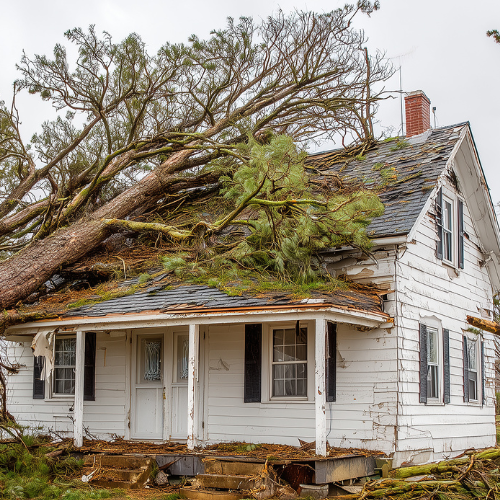
A storm just passed through Central Florida and you're standing in your living room watching a water stain spread across the ceiling. It's stressful, it's disorienting, and you don't know where to start. This guide walks you through exactly what to do — in order — so you protect your home, protect your insurance claim, and don't get taken advantage of in the chaos that follows a storm.
Florida averages more named storms than any other state in the continental US. Central Florida residents know this well — thunderstorms roll through almost daily in summer, and hurricane season runs from June through November. Whether it's hail damage, wind-lifted shingles, a fallen tree limb, or a full hurricane, the steps after the storm are largely the same.

Step 1 — Stay Safe First. Don't Rush Outside.
Before you do anything else, confirm the storm has fully passed. Don't go outside or onto the roof during ongoing lightning, high winds, or while debris is still falling. Wait for an all-clear from local weather services or emergency management.
Once you do go outside, stay on the ground. Do not attempt to get on your roof yourself — wet roofing materials are extremely slippery, and post-storm structural damage may make the roof unstable in ways that aren't visible from outside.
Step 2 — Do a Safe Ground-Level Assessment
Walk the perimeter of your home from the ground and look for visible signs of damage:
Check your attic with a flashlight if it's safe to do so — look for daylight, wet insulation, or active dripping.
Step 3 — Document Everything. Thoroughly.
Before any cleanup or temporary repairs begin, document the damage as completely as possible. Your insurance company will want evidence of the pre-repair condition.
The more documentation you have before cleanup begins, the stronger your insurance claim will be.
Step 4 — Prevent Further Damage With Temporary Protection
If there are active leaks or exposed areas, you may need to take temporary steps to prevent further water intrusion while waiting for a contractor. This is reasonable — and most insurance policies actually require that you take steps to mitigate additional damage.
⚠️ Keep All Receipts: Save receipts for any tarps, materials, or emergency services you pay for. These expenses are often reimbursable as part of your insurance claim under "mitigation costs."
Step 5 — Contact Your Homeowner's Insurance
Report the damage to your insurance company as soon as possible — don't wait. Most policies require you to report damage "promptly," and delays can complicate your claim.
When you call, have ready:
Your insurer will assign a claims adjuster to inspect the property. This inspection is important — but it is not the final word. You have the right to bring in your own licensed contractor for an independent assessment, and their findings can be presented to the insurer.
Step 6 — Choose a Licensed, Local Roofing Contractor — Carefully
This is where most homeowners make costly mistakes. After major storms, Florida sees a wave of out-of-state "storm chasers" — contractors who move into affected areas, offer quick and cheap repairs, collect large upfront deposits, and either do poor work or disappear entirely.
What to look for in a roofing contractor after a storm:
✅ Good Sign: A contractor who encourages you to verify their license, take time to review the contract, and get a second opinion if you want one is a contractor operating with confidence in their work.
Step 7 — Get a Professional Roof Inspection and Written Estimate
Once you've selected a licensed contractor, have them conduct a full roof inspection — not just the visible damage area. Storm damage is often more widespread than what's obvious from the ground, and a licensed contractor can identify issues the insurance adjuster may have missed.
Get a written, itemized estimate that includes:
If the contractor's assessment differs significantly from the insurance adjuster's, you can request a re-inspection or file a supplemental claim with the additional documentation.
After every major storm event in Central Florida — and especially after hurricanes — unlicensed or out-of-jurisdiction contractors flood the area. They knock on doors, make bold promises, and offer prices that seem too good to be true. Sometimes they are genuinely trying to help. More often, homeowners end up with substandard repairs that fail within months, no warranty to lean on, and a contractor who's already moved on to the next storm-affected market.
🔒 The Two-Minute License Check: Go to myfloridalicense.com, select "Verify a License," and enter the contractor's license number. Confirm the status is Current and Active, the license type is Certified Roofing Contractor (CCC), and the name matches the company you're hiring. If a contractor resists giving you their license number, that's your answer.
Living in Central Florida means accepting that storms are part of life. What that also means is that your roof is genuinely one of the most important investments you can make in your home — and who you hire to repair or replace it matters enormously.
A roof done right by a licensed, local contractor with a real workmanship warranty is a roof you can stop worrying about. A roof patched together by an unlicensed out-of-towner who collected a deposit and moved on is a problem that will resurface at the worst possible time.
Strux Roofing has been part of the Central Florida community from the start. When storms hit, we're already here. We're not traveling in from another state — this is our home, and these are our neighbors. That accountability shows up in every job we do.
Roof damage after a storm? We're ready. Get a fast, honest assessment from FL Certified Roofing Contractor CCC1331761. Local, licensed, backed by a lifetime workmanship warranty. Get your instant estimate at promo.struxroofing.com/trust or call (407) 700-5000.
© 2026 Strux Roofing | FL Certified Roofing Contractor CCC1331761 | Central Florida | struxroofing.com
Want to Learn more about Strux? --> https://promo.struxroofing.com/trust?44007251-Trust%20Campaign
When most Central Florida homeowners think about protecting their house from water, they think about the roof. That makes sense — it's the big,...
By July, hurricane season is already underway in Florida — and the busiest, most dangerous stretch is still ahead. The Atlantic season officially...
The most common question we hear from Florida homeowners who are seriously considering a roof replacement is some version of this: "Metal seems...
2 min read
When most Central Florida homeowners think about protecting their house from water, they think about the roof. That makes sense — it's the big,...
2 min read
By July, hurricane season is already underway in Florida — and the busiest, most dangerous stretch is still ahead. The Atlantic season officially...
1 min read
When it's time for a new roof, most homeowners already know it's a big decision — but they often underestimate just how much the material choice...