7 min read

How to Pay for a New Roof in Central Florida: 5 Options Compared

How to Pay for a New Roof in Central Florida: 5 Options Compared

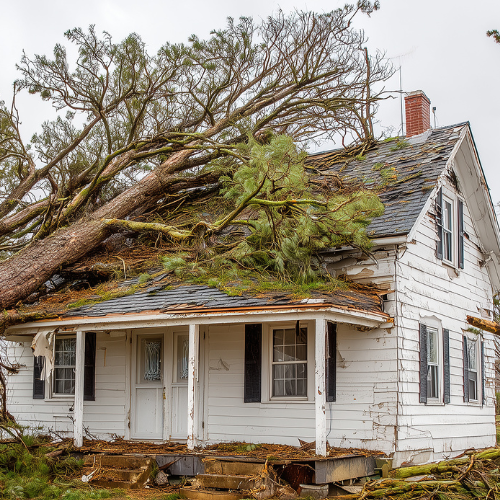
A roof replacement is a five-figure decision that almost nobody has budgeted for, and it rarely arrives on your schedule. It shows up as a stain on the ceiling, a pile of shingles in the yard after a summer storm, or a letter from your insurance company that uses the word "non-renewal."

So the first real question usually isn't which roofer. It's how do I pay for this.

There are five common answers in Central Florida. Each one is genuinely the right call for somebody — and genuinely the wrong call for somebody else. Here's a straight comparison, including the fine print that tends to get skipped.

What a roof replacement actually costs in Central Florida

Before comparing how to pay, it helps to know what you're paying for.

For a typical Central Florida single-family home, a full replacement generally lands between $10,000 and $30,000. Most architectural shingle jobs — the most common choice around here — fall in the $12,000 to $18,000 band.

Here's how that breaks down by material, for a roughly 2,000 square foot roof:

Material Typical installed cost
3-tab asphalt shingle $6,000 – $9,000
Architectural (dimensional) shingle $10,000 – $18,000
Impact-resistant shingle $12,000 – $18,000
Concrete tile $15,000 – $30,000
Clay tile $20,000 – $45,000
Standing seam metal $18,000 – $35,000

Then there's what the material price doesn't include, and this is where estimates diverge from each other:

  • Tear-off and disposal — typically $1,000 to $3,000, depending on how many layers are coming off.
  • Decking repairs — anywhere from $500 to $5,000. Nobody knows this number until the old roof is off, which is why a good estimate states the per-sheet price for replacement decking up front instead of surprising you with it mid-job.
  • Permits — usually $300 to $800 in Central Florida.
  • Roof complexity — valleys, dormers, multiple pitches and steep slopes all add labor, and two houses with identical square footage can differ by thousands because of it.
  • Code compliance — Florida's requirements for underlayment, fastening and secondary water barriers are strict, and they're part of the price of a roof that passes inspection and holds up in a storm.

One Florida-specific note worth knowing: a shingle roof that would last 25 years in a milder climate often needs replacing at 15 to 18 years here. Sun, heat and storm cycling are simply harder on a roof in Central Florida, and that shorter service life is part of why insurers watch roof age so closely.

Anyone who quotes you a roof over the phone without seeing it is guessing. Get it in writing, itemized, after someone has actually been on the roof.

Option 1: Paying cash

Best for: homeowners with a healthy cash reserve who want the simplest transaction.

Cash is the cheapest way to buy a roof, full stop. No interest, no application, no approval, no lien. It also puts you in the strongest position as a buyer, because you're not waiting on anyone else's timeline.

The honest downside is timing. Writing a $15,000 check in July means going into peak hurricane season with a thinner emergency fund — right when a deductible, a tree removal or an AC failure is most likely to land. Draining the account that protects you from the next problem to solve this one isn't automatically the smart move, even though it looks like the disciplined one.

If cash would take your reserve below a few months of expenses, it's worth pricing the alternatives before you commit.

Option 2: Filing an insurance claim

Best for: roofs with genuine storm damage — wind, hail, or impact — within your policy's claim window.

This is the single biggest source of confusion in Florida, so it's worth being precise: homeowners insurance covers sudden accidental damage. It does not cover age and wear.

  • A roof that lost shingles in a named storm is usually a claim.
  • A 22-year-old roof that's simply reached the end of its life usually isn't — even if it's leaking.

Two Florida-specific realities matter here. First, your deductible on wind or hurricane damage is often a percentage of your dwelling coverage, not a flat number, so it can be several thousand dollars. Second, insurers have gotten strict about roof age and condition, and plenty of Central Florida homeowners are now getting non-renewal notices or inspection demands tied to the roof rather than to any specific damage event. In that situation you're not filing a claim — you're being told to replace the roof to keep your policy.

If you think you have damage, get a roofer to inspect before you file. A denied claim is on your record, and an inspection costs you nothing. Strux works insurance claims regularly — bring your paperwork to the inspection and we'll tell you plainly which bucket your roof falls into.

Option 3: HELOC or home equity loan

Best for: homeowners with real equity, decent credit, and a roof that isn't actively leaking.

Borrowing against your home usually carries the lowest interest rate of any borrowing option, and the interest may be tax-deductible when the funds are used to improve the home (talk to your CPA — that's their call, not ours).

The catch is speed and friction. A HELOC or home equity loan typically involves an application, income documentation, an appraisal or valuation, and a closing process. Realistically that's weeks, not days. It's a great tool for a planned replacement and a poor tool for water coming through the ceiling in August.

It also puts a lien on your house, which is worth being deliberate about.

Option 4: Credit cards

Best for: small repairs, or a short-term bridge you're confident you can clear fast.

Cards are the fastest money available and the most expensive to keep. On a five-figure balance, the math gets ugly quickly — carrying $15,000 at a typical card APR costs hundreds of dollars a month in interest alone before you touch the principal. A promotional 0% purchase window on a card can work if you will genuinely clear the balance inside it, but the same trap described in the next section applies, and most cards won't have a limit large enough for a full replacement anyway.

For a $900 repair, a card is fine. For a full roof, it's usually the most expensive option on this list.

Option 5: Contractor financing

Best for: homeowners who need the roof now and would rather spread the cost than drain savings or wait on an appraisal.

Contractor financing is a loan or credit line arranged through the roofer but issued by a third-party lender — not by the roofing company. You prequalify in minutes, the lender makes the credit decision, and the roof goes on now while you pay over a set term. Approval typically comes back in minutes to a day, which is why it's the practical option when the roof can't wait.

Here's the part almost nobody explains, and it matters more than the interest rate:

"0%" comes in two very different flavors. Ask which one you're signing.

True 0% APR means the promotional rate is genuinely zero for the promotional term. Pay the scheduled payments, and the roof costs what the contract says.

Deferred interest means interest is accruing the whole time at the standard rate, and it's only waived if you pay the entire balance in full before the promotional window closes. Miss it by one month — or by one dollar — and the accrued interest from day one can be added to your balance in a single lump.

Both get advertised with a big "0%." They are not the same product. The question to ask is simply: "Does interest accrue during the promotional period?" A straight answer is a good sign about everyone involved.

Strux offers financing through Hearth on qualifying roof projects, subject to credit approval.

The five options, side by side

  Speed Interest cost What it requires Best for
Cash Immediate None Available savings Strong reserves, planned replacement
Insurance claim Weeks None (you pay the deductible) Covered sudden damage Genuine storm damage
HELOC / equity loan Weeks Lowest of the borrowing options Equity, credit, appraisal Planned replacement, no active leak
Credit card Immediate Highest Available credit limit Small repairs, short bridges
Contractor financing Minutes to a day 0% promotional on qualifying projects,* then standard APR Credit approval Roof can't wait, savings stay intact

*On approved credit. Financing provided by HEARTH, not by Strux Roofing. Qualifying projects only. See full terms.

Five questions to ask any roofer before you finance

  1. Who is the actual lender? The roofer arranges it; a bank or finance company issues it. You should be told the name before you apply.
  2. Does interest accrue during the promotional period? True 0% versus deferred interest — the single most important question on this page.
  3. Is there a prepayment penalty? There shouldn't be. If you can pay it off early, you should be able to do that for free.
  4. Is the financed amount tied to a specific written scope? You're financing a defined job, not an open number. If the scope changes, you should see a written change order.
  5. What warranty comes with the work? Manufacturer warranties cover the materials. Workmanship warranties cover the installation — and installation is what fails first. Ask for both, in writing.

If a roofer gets vague on any of those five, that's your answer.

Get the number in writing before you decide how to pay

The mistake we see most often isn't picking the wrong payment method. It's picking one before there's a real, itemized, in-writing number to attach it to. You can't compare a HELOC to a 0% promotional term against a price that's still a verbal estimate.

So the order that actually works is: inspection → written estimate → payment decision.

Strux Roofing does free roof inspections and written, itemized estimates across Winter Park, Orlando and Central Florida — no charge, no obligation, no hard close. If financing turns out to be the right fit, you can see what you'd qualify for on our financing page. If cash or a claim is the better move, we'll tell you that too.

Get a free inspection and written estimate: request one here or call 386-308-7170.

Frequently asked questions

Can you finance a roof replacement?
Yes. Most established roofing companies offer financing through a third-party lender, with approval decisions typically coming back in minutes to a day. Strux offers financing through Hearth on qualifying roof projects, subject to credit approval.

Will homeowners insurance pay for my old roof?
Generally no. Insurance covers sudden accidental damage such as wind or hail, not age and normal wear. A roof that has simply reached the end of its service life is usually a homeowner expense, even if it's leaking. Get an inspection before you file a claim.

How long does a roof replacement take?
Most single-family asphalt shingle replacements are completed in one to two days once materials and permits are in place. Tile and complex roofs take longer.

Should I pay cash or finance my roof?
If paying cash would leave your emergency fund thin heading into storm season, financing a roof at a 0% promotional rate can be the more conservative choice — as long as you've confirmed whether interest accrues during the promotional period. Get the written estimate first, then compare.

What's the difference between 0% APR and deferred interest?
With true 0% APR, no interest applies during the promotional term. With deferred interest, interest accrues from the purchase date and is waived only if the balance is paid in full before the promotional period ends. Always ask the lender which one applies.


Strux Roofing · Winter Park, FL · Serving Greater Orlando and Central Florida · FL License #CCC1331761 · GAF-certified · locally owned and operated. Free inspections and written estimates.

How to Pay for a New Roof in Central Florida: 5 Options Compared

How to Pay for a New Roof in Central Florida: 5 Options Compared

A roof replacement is a five-figure decision that almost nobody has budgeted for, and it rarely arrives on your schedule. It shows up as a stain on...
Read More
Why Your New Roof Isn't Finished Without New Gutters

Why Your New Roof Isn't Finished Without New Gutters

When most Central Florida homeowners think about protecting their house from water, they think about the roof. That makes sense — it's the big,...
Read More
Hurricane Season Is Here — Is Your Central Florida Roof Actually Ready?

Hurricane Season Is Here — Is Your Central Florida Roof Actually Ready?

By July, hurricane season is already underway in Florida — and the busiest, most dangerous stretch is still ahead. The Atlantic season officially...
Read More
Asphalt, Metal, Tile: Choosing the Right Roof for Your Florida Home

1 min read

Asphalt, Metal, Tile: Choosing the Right Roof for Your Florida Home

When it's time for a new roof, most homeowners already know it's a big decision — but they often underestimate just how much the material choice...

Read More
Hurricane Season Is Here — Is Your Central Florida Roof Actually Ready?

2 min read

Hurricane Season Is Here — Is Your Central Florida Roof Actually Ready?

By July, hurricane season is already underway in Florida — and the busiest, most dangerous stretch is still ahead. The Atlantic season officially...
Read More
After the Storm: A Step-by-Step Guide to Handling Roof Damage in Central Florida

4 min read

After the Storm: A Step-by-Step Guide to Handling Roof Damage in Central Florida

A storm just passed through Central Florida and you're standing in your living room watching a water stain spread across the ceiling. It's stressful,...

Read More